One Eximus: A Graffiti-Style Display Font for Handmade Brands
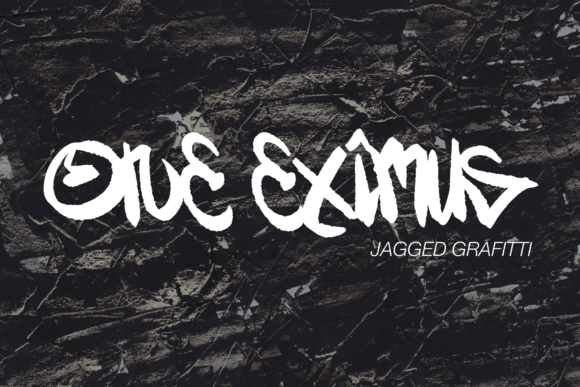
If you've ever spent hours tweaking a label, reworking an invitation layout, or adjusting spacing on a printable wall art file—only to feel like something's *just* missing—that "something" might be personality. One Eximus is that spark: a bold, expressive display font with unmistakable graffiti energy, designed not just to look cool, but to work hard across your physical and digital product line.
As someone who hand-labels small-batch candles, designs wedding welcome boards for local couples, and sells printable planner pages on Etsy, I need fonts that balance visual impact with real-world function. One Eximus delivers exactly that—it’s not a delicate script or a minimalist sans serif. It’s confident, slightly rebellious, and full of movement, yet remains surprisingly legible at sizes as small as 14pt on printed tags or 20pt on vinyl stickers cut with my Cricut Maker.
What makes One Eximus especially useful for crafters? Its strong letterforms hold up beautifully in cutting machine software. The thick strokes, intentional unevenness, and dynamic angles don’t collapse or blur when scaled down for jar labels, boutique gift tags, or iron-on transfers. I’ve used it for “Small Batch • Hand Poured” on soy candle labels—and customers consistently comment on how “premium” the packaging feels, even though it’s printed at home. That perceived quality boost? It starts with typography.
For seasonal products, One Eximus adds instant character without needing extra design elements. Think “Gather • Celebrate • Toast” on farmhouse-style holiday mugs, or “You’re Invited!” on rustic birthday invitations where the font itself becomes part of the texture. On printable wall art—especially for teens’ rooms or creative studios—it anchors the composition while leaving breathing room for watercolor backgrounds or subtle textures. And yes, it works on dark substrates too: reversed out in white or cream over navy cardstock or matte black sticker paper, it pops without looking harsh.
It shines brightest in short, high-impact uses: brand names, product titles, signage headers, signature lines on greeting cards, and decorative phrases on tote bags or t-shirts. Don’t try to set full paragraphs in One Eximus—it’s a display font, not body text. But that’s its strength. Use it where attention needs to land: the “Welcome” on a wedding chalkboard sign, the “New Arrivals” banner above your shop shelf, or the “Handmade with Love” tag tucked into a gift box.
Pairing One Eximus thoughtfully expands its versatility. For clean contrast, I often combine it with a warm, neutral sans serif like Montserrat or Lato—perfect for ingredient lists beneath a bold “Herbal Infusion” header on tea packaging. When designing bridal stationery, I’ll layer it with a soft, flowing script (like Allura or Great Vibes) for names and dates, letting One Eximus carry the structural weight of “RSVP” or “Reception.” For vintage-inspired labels—think apothecary jars or artisanal soap bars—I pair it with a gentle serif like Cormorant Garamond to soften the edge while keeping hierarchy clear.
Before downloading, check what’s included: most freebie versions of One Eximus come as a single OTF or TTF file, with standard Latin characters and basic punctuation. There are no alternate glyphs, swashes, or multilingual extensions—but for English-language craft projects (which cover 95% of my label, sticker, and printable work), that’s more than enough. If you’re creating SVG files for Silhouette Studio or Cricut Design Space, test the font’s vector output first: One Eximus converts cleanly, with minimal node cleanup needed—even on letters like “g,” “y,” and “S,” which can sometimes get messy in graffiti-style fonts.
Readability tips for real production: avoid using One Eximus below 12pt on printed materials unless it’s large-format signage viewed from a distance. For die-cut stickers under 1.5”, stick to 2–3 words max (“Yes Please”, “Hello Sunshine”, “Made Here”). On fabric transfers or heat-pressed mugs, increase letter spacing by 10–15 units in your design software to prevent ink bleed between strokes. And always preview mockups at 100% zoom—not “fit to screen”—to catch tight kerning before sending to print.
Licensing matters—especially if you sell physical goods or digital downloads. One Eximus is offered as a freebie, but verify the license terms before use. Most free versions allow commercial use for physical products (stickers, apparel, packaging), but restrict resale of the font file itself or use in editable templates sold on marketplaces like Creative Market. If you’re bundling it into Canva templates or SVG bundles for Etsy, double-check whether the license permits derivative digital assets. When in doubt, reach out to the designer or use it only for your own branded items—not client work where font ownership could become an issue.
I keep One Eximus in my go-to folder alongside other reliable fonts for handmade businesses—not because it’s flashy, but because it solves problems. It adds warmth without cutesiness, edge without alienating, and distinction without sacrificing clarity. Whether you're printing 200 wedding napkin wraps or designing one-of-a-kind planner stickers for your shop, this display font helps your work stand out on crowded shelves, in social feeds, and in customers’ hands. It doesn’t shout over your product—it elevates it.
And honestly? That’s rare in a freebie. Most expressive typefaces either lack polish or come with restrictive licenses. One Eximus bridges that gap: expressive enough for branding, sturdy enough for production, and generous enough for makers who need real value—not just visual flair.